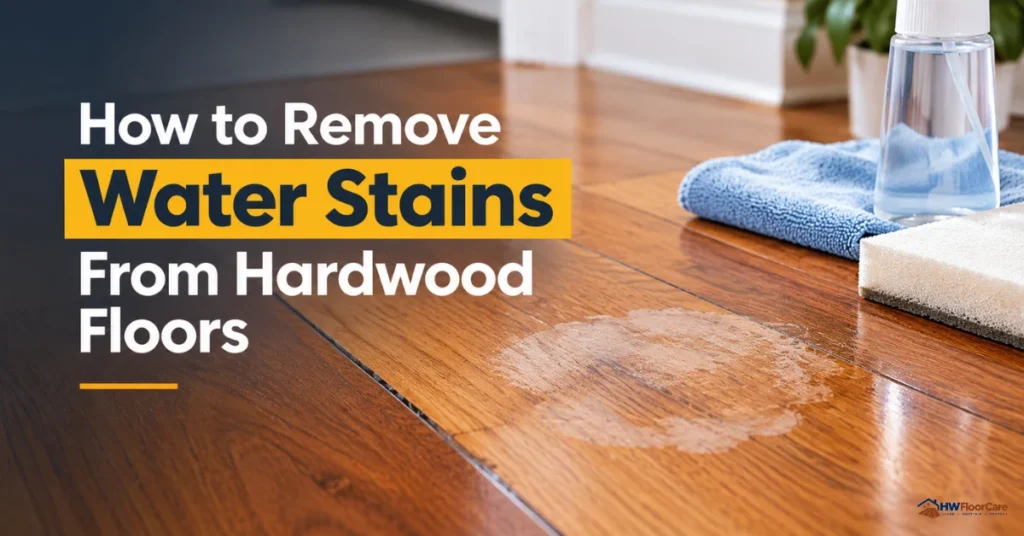
To remove water stains from hardwood floors, first identify the color. White or cloudy stains sit in the finish and often lift with gentle heat, a dry cloth, or fine steel wool and wax. Gray or black stains have reached the wood itself and need sanding or an oxalic acid treatment, followed by refinishing to match the surrounding boards.
Quick Overview:
- White water stains sit in the finish and usually come out with a warm iron, lemon oil on fine steel wool, or denatured alcohol.
- Black water stains sit in the wood itself and need sanding, an oxalic acid or peroxide bleach, and a refinish.
- Total time is 30 minutes for white stains and one to two days for black stains, including drying and finishing.
- You need clean cotton cloths, very fine steel wool, 120-grit sandpaper, and wood bleach. Test every product on a hidden spot first.
- Wipe spills within minutes and keep plant pots off bare wood to prevent new stains.
What Causes Water Stains on Hardwood Floors?
Water stains form when liquid gets past the floor’s protective finish. Spills, pet accidents, plant pots, and leaks are the usual sources.
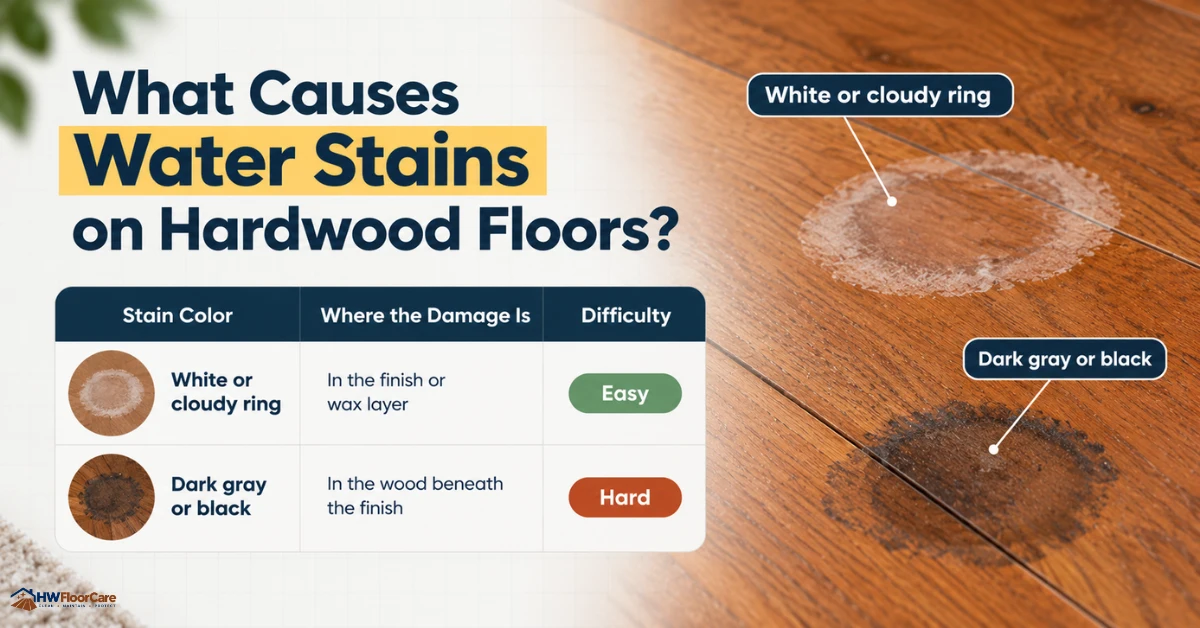
The color tells you how deep the water went. White or cloudy marks mean moisture is trapped in the finish. Black or dark marks mean water reached the wood fibers (Hunker; Better Homes & Gardens Australia).
How to Tell White Stains From Black Stains
Look at the color first, then test the depth. A white or smoky ring is a surface stain. A dark ring that stays dark after you wipe it clean has soaked into the wood.
If you are unsure, rub a small amount of mineral oil on the mark. A white stain often darkens to match the surrounding wood. A black stain stays dark.
A hardwood floor with a polyurethane coating, which covers most modern floors, resists spills but is not waterproof. Liquid left standing will eventually seep through (Hunker). Painting contractor George Crew told Apartment Therapy that water stains are tricky because they can seep below the finish into the wood.
What You Need Before You Start
- A soft cotton cloth and a microfiber cloth
- Mineral oil or olive oil, plus white vinegar
- Denatured alcohol or isopropyl alcohol
- Very fine steel wool (0000 grade) and lemon oil
- An iron with the steam setting turned off
- Sandpaper in 100 to 120 grit
- Wood bleach containing oxalic acid, or standard hydrogen peroxide
- Paste wax or floor polish for touch-ups
- Rubber gloves, safety glasses, and open windows for ventilation
How to Remove White Water Stains From Hardwood Floors
Start with the gentlest method and move up only if the stain stays. White stains are in the finish, so most of these fixes never touch the wood.
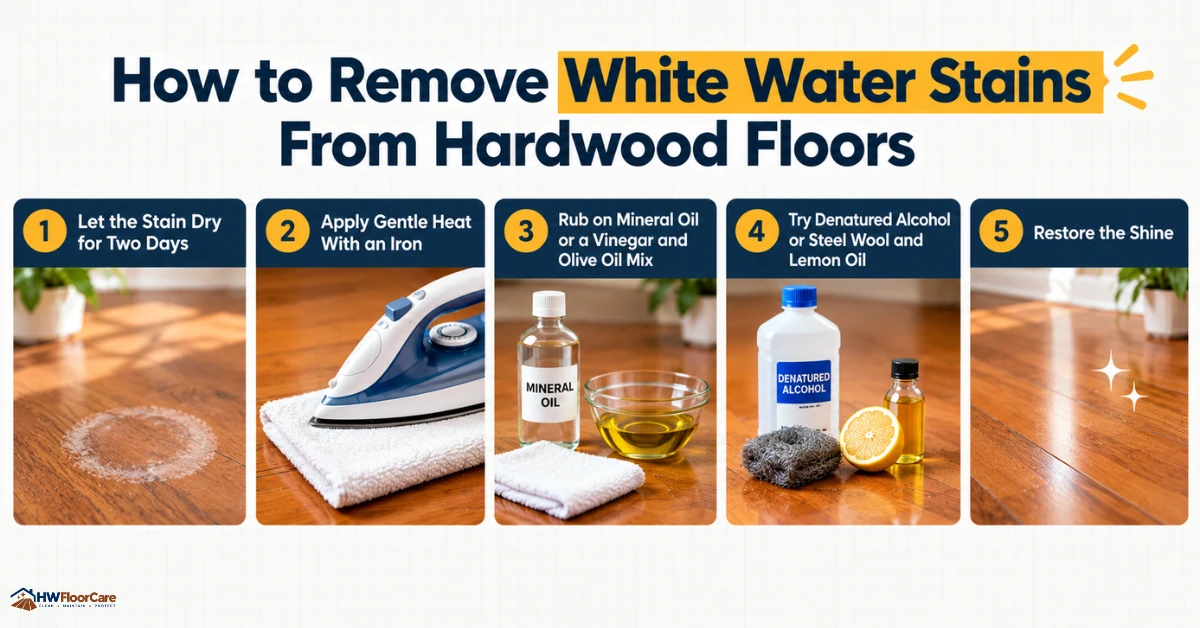
Step 1: Let the Stain Dry for Two Days
Step 2: Apply Gentle Heat With an Iron
Set the iron to the no-steam setting. Lay a dry cotton cloth over the stain and press the iron on top for two to three seconds. Lift the cloth and check the spot. Repeat in short bursts if needed.
Keep the iron moving and never press for long. Heat can scorch the finish.
Step 3: Rub on Mineral Oil or a Vinegar and Olive Oil Mix
Dab a thin layer of mineral oil on the stain with a microfiber cloth and rub gently along the grain (Flooring King). The oil displaces moisture trapped in the finish.
You can also mix equal parts white vinegar and olive oil. The vinegar lifts the stain and the olive oil polishes the surface (UK Flooring Direct).
Step 4: Try Denatured Alcohol or Steel Wool and Lemon Oil
Dampen a cloth with denatured alcohol and rub the stain for a few seconds only. Buff the area dry afterward.
For a stubborn ring, soak a very fine steel wool pad in lemon oil and rub lightly with the grain. The oil lubricates the pad and prevents scratches (Better Homes & Gardens Australia).
Step 5: Restore the Shine
Once the mark is gone, touch up the spot with paste wax or floor polish and buff it with a soft cloth (Hunker).
How to Remove Black Water Stains From Hardwood Floors
Black stains need the finish removed so you can reach the wood. This takes more work, so practice on an offcut or a hidden corner first.
Black stains also signal how long moisture sat on the floor. Leaks, plant pots, and repeated pet accidents are the usual causes, so find and stop the source first.
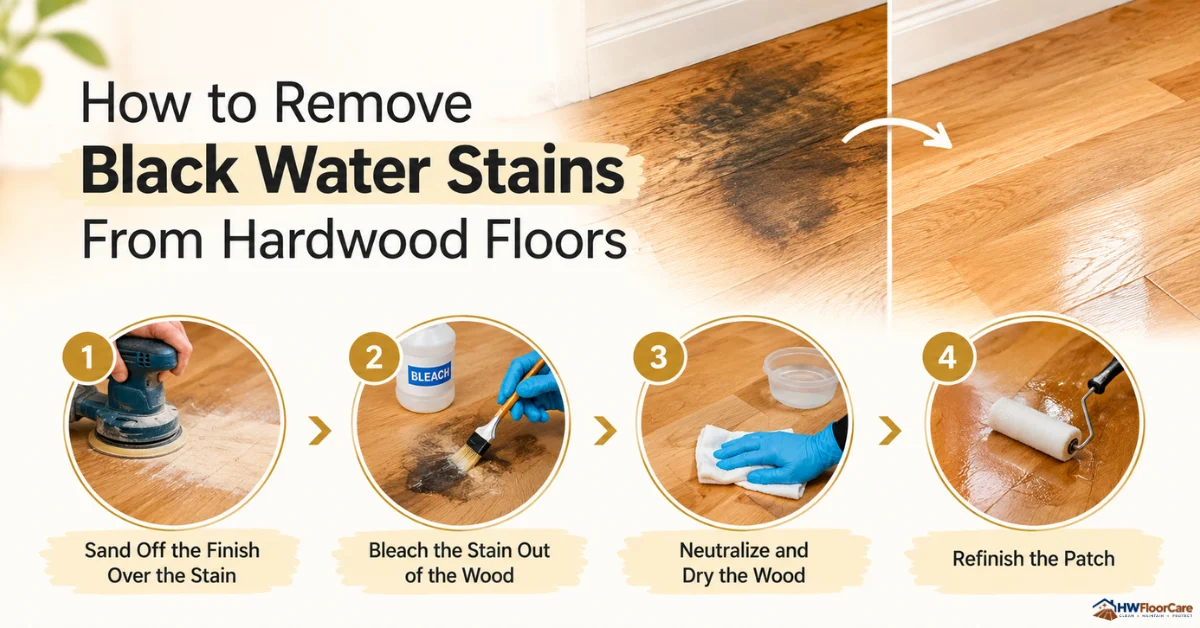
Step 1: Sand Off the Finish Over the Stain
Sand the stained area by hand with 100 to 120 grit paper, working with the grain (Hunker; Flooring King). Keep sanding until bare wood shows. If the stain is shallow, sanding alone may remove it.
Step 2: Bleach the Stain Out of the Wood
If the dark mark remains, apply a wood bleach containing oxalic acid. This is the best option for water stains, though full-strength hydrogen peroxide works in some cases (Hunker).
If you choose peroxide, test it on a hidden spot first. Soak a cloth, lay it on the stain, and give it 5 to 10 minutes. You can dilute the peroxide with water at first and move to a stronger mix if needed (Hunker).
Follow the product label for timing on any bleach. Wear gloves and eye protection, and ventilate the room.
Step 3: Neutralize and Dry the Wood
Wipe the area with clean water to neutralize the bleach. Let the wood dry completely before you touch it up. Bleach left in the wood can interfere with the new finish.
Step 4: Refinish the Patch
Sand lightly to smooth the area, match the stain color if your floor has one, and apply the same type of finish as the rest of the floor. Blend the edges outward so the repair does not show.
Better Homes & Gardens Australia lists stripping, sanding, and resealing as an alternative to bleach for black rings. If several boards are dark or soft, replacing them is the cleaner repair.
When to Call a Professional
Call a flooring contractor if the stain covers a large area, the boards are cupped or soft, or you see mold. These signs point to deep water damage, and a surface repair will not hold.
The National Wood Flooring Association (NWFA) is a not-for-profit trade association covering manufacturers, installers, inspectors, and consultants in the hardwood flooring industry. Its magazine,
Hardwood Floors Magazine, publishes articles on assessing and addressing water damage, which are worth reading before you hire anyone.
A professional can sand and refinish a whole room so the color matches evenly. Spot repairs on a large floor often leave visible patches.
How to Prevent Water Stains on Hardwood Floors
Wipe up spills immediately, because the longer water stays on the floor, the harder the stain is to remove (Advantaclean).
Put trays under plant pots, mats at entrances, and rugs near sinks and dishwashers.
Re-coat the finish when it wears thin, since oiled floors that are not maintained stain more easily (UK Flooring Direct).
Key Takeaways
- Check the stain color first, because it tells you whether the damage is in the finish or in the wood.
- Treat white stains with heat, oil, or alcohol before trying anything stronger.
- Treat black stains by sanding, bleaching with oxalic acid, and refinishing.
- Test every method on a hidden spot and fix the water source before repairing the floor.