How to Care for Hardwood Floors in Winter: A Complete Guide
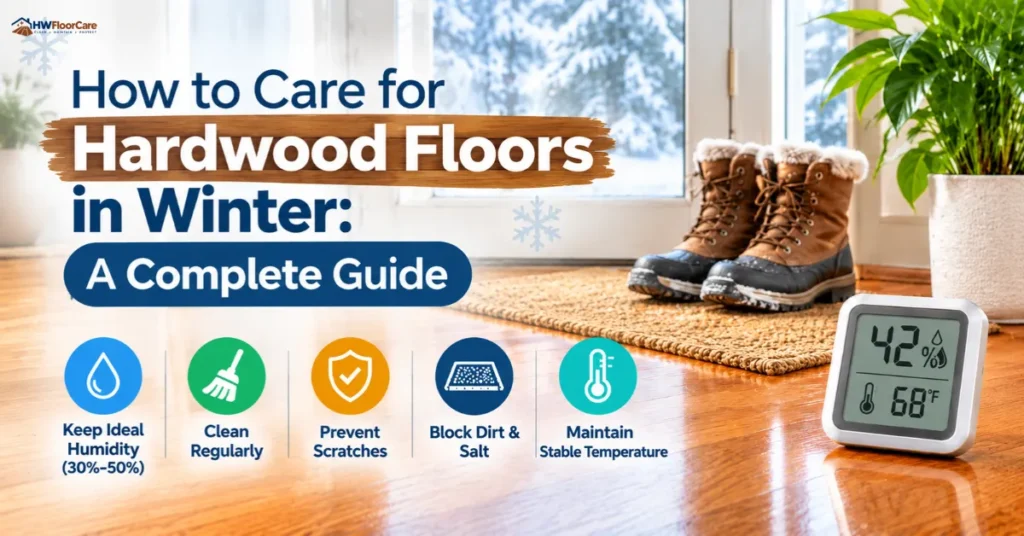
To care for hardwood floors in winter, keep the air in your home between 30% and 50% humidity, stop salt and slush at the door, and wipe up water right away. Clean with a dry microfiber mop and a gentle, pH-neutral cleaner. Dry winter air makes wood shrink, so small gaps between boards are common. Most of them close again when the air gets damper. The steps below take about 15 minutes a week.
Why Hardwood Floors Need Extra Care in Winter
Wood naturally expands and contracts as its moisture content changes. During winter, heating systems can reduce indoor humidity, causing hardwood boards to shrink. This may create small gaps between boards or splits in the wood.
Winter also brings additional dirt, grit, and moisture into the home. These can scratch the protective finish, leave salt residue, or contribute to moisture damage.
Common winter problems include:
- Gaps between boards: Often caused by dry indoor conditions.
- Scratches: Grit and sand carried indoors can wear down the finish.
- Water stains: Melted snow and spills may leave marks.
- Cupping or warping: Can develop when wood absorbs excessive moisture.
The National Wood Flooring Association’s winter flooring guidance explains how seasonal humidity changes and winter conditions can affect hardwood floors.
Why winter is hard on hardwood
Wood is a natural material that soaks up and gives off moisture as the air around it changes. In summer, damp air makes boards swell. In winter, cold air outside holds very little water, and your furnace or heaters dry out the air inside even more. The boards lose moisture and shrink, which is why you may see thin gaps between planks.
Hardwood floors change with their surroundings: summer heat and humidity make wood grow bigger, while dry winter air makes it shrink, as a flooring guide from West Fraser explains. This is normal for solid oak, maple, hickory, and walnut. Engineered hardwood moves less, but dry air still affects it.
Winter brings two other problems:
- Salt and grit: According to the National Wood Flooring Association (NWFA), boots can carry in mud, snow, water, and salt, and salt leaves a white, rough residue that can scratch the floor. Grit acts like sandpaper under every step.
- Standing water: Puddles can leave dull spots and white rings. If they sit long enough, they can make boards curl up at the edges, which is called cupping.
If a ring has already formed, see our guide on how to remove water stains from hardwood floors.
Maintain the Right Indoor Humidity
Humidity control is one of the most effective ways to protect hardwood floors in winter.
When indoor air becomes too dry, wood loses moisture and contracts. When humidity becomes too high, wood can absorb moisture and expand.
Many flooring guidelines recommend maintaining relative humidity around 30%–50%, although some manufacturers recommend different ranges. The National Wood Flooring Association recommends 30%–50%, while Bruce Flooring’s hardwood flooring FAQs provide product-specific guidance of approximately 35%–55%. Follow the instructions for your particular floor.
How to control indoor humidity
- Use a digital hygrometer to monitor relative humidity.
- Check readings regularly while heating systems are running.
- Use a humidifier if humidity remains below your flooring manufacturer’s recommended range.
- Clean and maintain humidifiers according to their instructions.
- Avoid excessive humidity and window condensation.
The US Environmental Protection Agency’s indoor air quality guidance recommends controlling indoor moisture and generally keeping relative humidity below 60%, ideally around 30%–50%, where possible.
Stop salt and slush at the door
Stopping dirt before it enters is easier than fixing damage later. A good entry setup catches most winter mess right away. NWFA suggests breathable throw rugs at doorways and area rugs in busy spots to keep dirt off the floor.
Set up these three layers at every door you use:
- A rough outdoor mat to scrape snow and salt off boots
- A soft indoor mat to soak up water
- A boot tray for wet shoes
A few more habits help a lot:
- Choose a rug pad made of felt or natural rubber.
- Some plastic-style backings can trap water or leave marks on the finish.
- Shake out your mats once a week.
- A mat full of salt hurts the floor as much as bare ground does.
- Follow a shoes-off rule from November through March. It is the cheapest protection you can get, and home-repair pros recommend it too.
- Wipe your pet’s paws after walks on salted sidewalks.
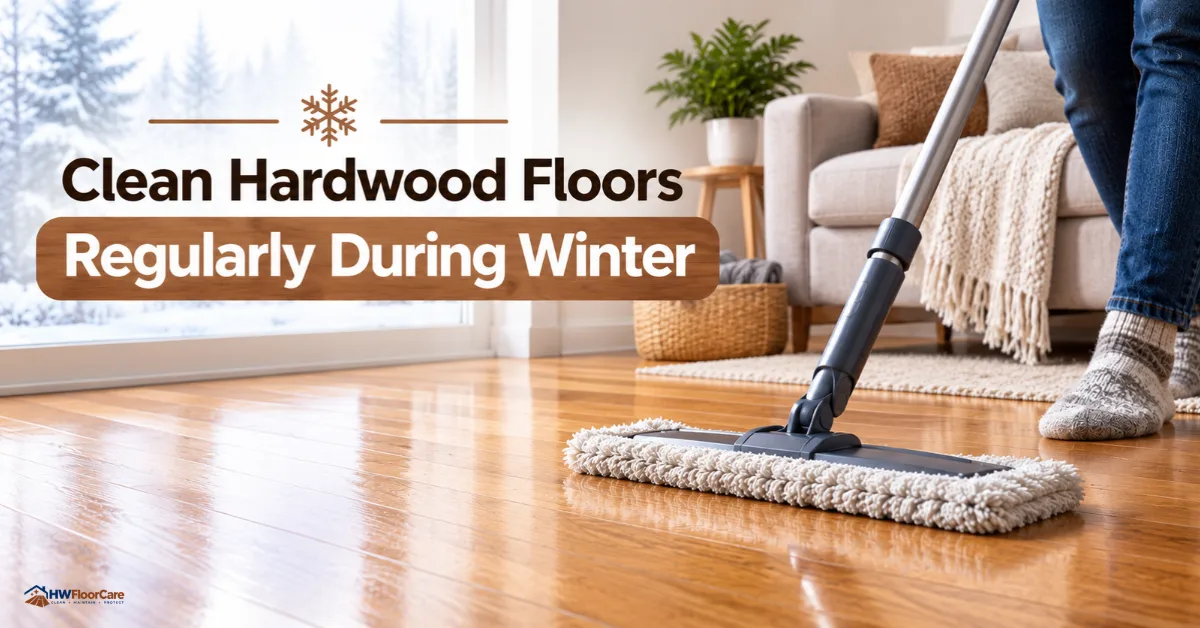
Clean Hardwood Floors Regularly During Winter
Winter cleaning means removing grit and water without adding more water. NWFA says to sweep or dust mop often, soak up puddles with a towel, and be extra careful when salt is on the floor. Use a microfiber dust mop, or a vacuum made for hardwood with the spinning brush turned off.
To remove salt, follow these steps:
- Sweep or vacuum up all loose salt and dirt first.
- Wring out a microfiber pad until it is only a little damp.
- Mix it with a pH-neutral hardwood cleaner, following the label.
- Wipe the salty spot in the direction of the boards.
- Dry the spot right away with a clean towel.
Skip these products, because they can dull or cloud the finish:
- Steam mops
- Vinegar-and-water mixes
- Oil soaps
Follow a Simple Winter Maintenance Routine
A consistent routine helps protect hardwood flooring without requiring extensive effort.
Want to tick these off all season? Our free printable care kit includes a winter checklist and a one-page do and don’t cheat sheet.
Which gaps are normal and which need a pro
Small gaps in winter are expected. NWFA says gaps and splits are normal when they show up and fade away with the seasons. Most thin gaps close in spring when the air gets damper.
Call a flooring pro if you see any of these signs:
- Gaps that stay wide after the damp months
- Boards with edges higher than the middle (cupping)
- Cracks that keep growing
- Boards that lift or buckle
Gaps that do not go away may need a professional to sand and fill them.
Do not fill gaps with wood putty or caulk in winter. In summer, the boards grow again, and hard filler can push them together until they lift. Wait to see if the gaps close first. A fresh coat of polyurethane finish can add protection if your floor looks worn, but ask a pro to check the floor before you do it.
Final Tips for Winter Hardwood Floor Care
Protecting hardwood floors during winter comes down to five practical habits:
- Monitor indoor humidity.
- Maintain reasonably stable indoor conditions.
- Clean gently and avoid excessive water.
- Keep snow, salt, and grit away from the floor.
Investigate - persistent moisture problems before attempting repairs.
Following these steps can help preserve your floor’s appearance and reduce avoidable damage throughout winter.
Share this on social media.