
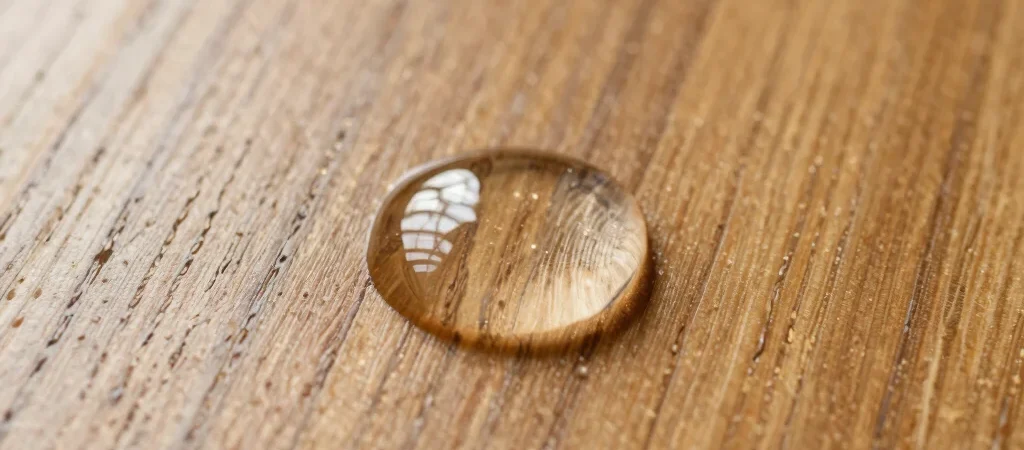
Homeowners often assume dull wood floorboards require complete sanding down to bare timber. In many cases, the underlying wood structure remains completely sound while only the top coating needs light attention.
The Single Drop Water Test
Place a single droplet of water on high-traffic areas where the finish looks worn or faded. If the water beads up cleanly, your polyurethane sealant remains active and is still protecting the underlying grain structure.
If the water slowly soaks in and darkens the timber beneath within minutes, the sealant has worn thin and moisture can reach the raw wood fiber.
Choosing Between Recoating and Sanding
When the finish passes the water test but exhibits light surface scuffs, a simple screen-and-recoat procedure restores luster without aggressive sanding. This refinishing basics method scuffs the existing poly layer so a fresh protective coat adheres seamlessly.
Preparing the Surface for Long Life
Thoroughly deep clean the entire room to remove embedded wax and silicone polish residues before applying fresh finish coats. Clean preparation guarantees strong adhesion and smooth finish clarity across every plank.